Want to make thrift shopping worth your time? Spotting high-quality second-hand clothes is all about knowing what to look for. Here’s how you can identify pieces that last:
- Fabric Matters: Look for natural fibers like wool, cotton, and silk. Avoid synthetics that pill or wear down quickly.
- Inspect Seams: Even stitching and reinforced stress points mean better durability.
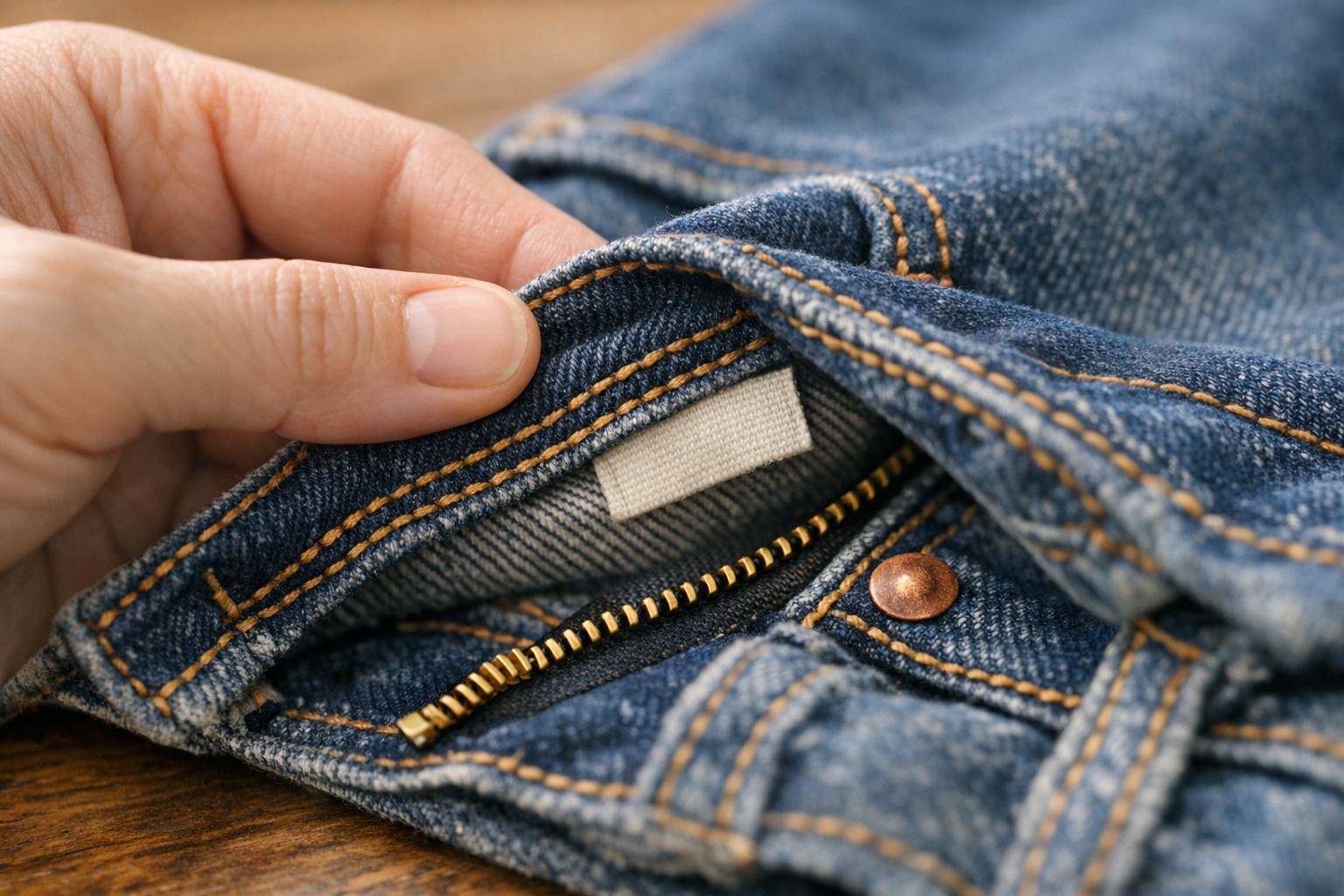
- Check Hardware: Test zippers, buttons, and hooks for sturdiness. Metal zippers are often more reliable than plastic.
- Fit and Shape: Ensure the garment holds its structure and check for proper pattern alignment.
- Read Labels: Natural fibers and detailed care instructions often signal better craftsmanship.
These simple checks can help you find durable, well-made clothing while reducing waste and supporting second-hand stores.
1. Check the Fabric Type and Material
Material quality and composition
When it comes to thrift shopping, natural fibers like wool, cashmere, silk, linen, and cotton are the benchmark for quality. These materials not only stand the test of time but often improve with wear. Margaret Bishop, a professor at Parsons School for Design and the Fashion Institute of Technology, explains,
“a cotton T-shirt that feels softer and smoother is better quality than one that feels rough”.
Start by checking the care label to confirm the fiber composition. Items made from 100% cotton, linen, or wool are rare finds but worth seeking out. Linen, for instance, is known for its durability and becomes softer with each wash. Wool, on the other hand, should feel dense and soft – avoid pieces that feel scratchy or irritate the skin.
Once you’ve confirmed the material, take a closer look at how the garment is constructed to ensure it matches the quality of the fabric.
Durability and craftsmanship
Steer clear of synthetic fibers like polyester, acrylic, and nylon. These materials are notorious for pilling (those annoying little fuzz balls) and tend to degrade quickly when exposed to heat, such as from dryers or irons. It’s worth noting that synthetic fabrics also contribute to 14% of global plastic pollution.
To test fabric quality, give it a quick squeeze – good material should bounce back without leaving deep wrinkles. Run your hand across the surface; excessive pilling is a red flag, signaling that the fibers are breaking down. For stretchy fabrics, check for signs of elastic wear or damage.
High-quality garments often have a certain weight to them, drape beautifully, and feel smooth and substantial to the touch.
2. Look at the Stitching and Seams
If you’re aiming for quality in your clothing, the stitching and seams are a great place to start. High-quality garments typically showcase even stitching with no loose threads or gaps. As Monique Thomas, Director and Co-founder of Goodbyes, puts it:
“Well-constructed pieces tend to have clean, tight stitching without gaps or fraying”.
One key indicator of durability is the number of stitches per inch – more stitches result in tighter, stronger seams. Run your fingers along the seams; they should lie flat and smooth against the fabric. If you notice puckering or twisting, it’s a sign that the threads weren’t aligned properly during construction, which can lead to discomfort or quicker wear and tear.
Pay close attention to high-stress areas like armholes, shoulders, crotch, and pocket corners. These spots should have double stitching or reinforcements to handle everyday strain. A quick stress test can help: pull the fabric taut along the seam and hold it up to the light. If you see any holes, fraying, or pulling threads, the garment likely won’t hold up over time.
Finally, check the edges for finishing techniques. Look for overlocked edges to prevent fraying, or more advanced methods like flat-felled seams (often seen in jeans with two visible stitch lines) or busted seams with overlocking. These details reflect a level of craftsmanship that ensures the garment is built to last.
3. Test Zippers, Buttons, and Closures
Condition of Hardware and Fastenings
Once you’ve assessed the fabric and seams, it’s time to evaluate the hardware – this is a key indicator of how well the garment will hold up over time. Start with the zippers. Slide them up and down a few times to ensure they move smoothly. The teeth should align perfectly, interlocking securely without any gaps. A sturdy, well-made slider is also essential. As Brooke Ramirez, Owner of Hello Gorgeous Threads, explains:
“Metal zippers, while sometimes harder to move at first, are far more durable and less prone to breakage than plastic ones”.
Look for sliders that feel solid and check for quality markings such as YKK, Riri, Ideal, or Talon – these are often signs of a well-constructed zipper. Many high-quality sliders also feature an “auto-lock” mechanism to keep the zipper in place once released.
Next, inspect the buttons. Gently tug on each one to ensure they’re securely attached. Well-made garments often include reinforced stitching or an internal stay button to prevent the outer button from tearing loose. Bonus points if you find spare buttons sewn into the care label or side seam – this is a hallmark of better craftsmanship.
For metal snaps, clasps, and hooks, apply firm pressure to test their hold. If they feel loose or flimsy, they might not stay fastened during wear. Lastly, take a quick look at the stitching around these fastenings. Consistent, tight stitching around closures is a good sign of overall garment quality.
4. Assess the Fit and Construction
Tailoring and Garment Structure
After evaluating the fabric and stitching, it’s time to focus on the garment’s overall construction. A well-made piece should maintain clean, tailored lines that follow natural body contours. Hold the garment at arm’s length – does it retain its intended shape? If it droops or twists unnaturally, it might be poorly constructed or improperly stored for too long.
Pay close attention to the shoulders on knitwear, such as sweaters and T-shirts. Look for signs of permanent stretching or bumps, often called “shoulder horns” or “hanger bumps“, caused by prolonged use of wire hangers. These distortions are almost impossible to fix and can ruin the way the garment sits on your body. For items with elastic, test a small section of the fabric – it should snap back to its original shape quickly.
Pattern alignment is another hallmark of careful craftsmanship. High-quality garments ensure patterns align perfectly at seams and pockets, reflecting precision in construction. Mismatched patterns, on the other hand, suggest sloppy cutting and lower quality. Margaret Bishop, Professor at Parsons School for Design and the Fashion Institute of Technology, emphasizes:
“Price does not always equate to quality. Sometimes the more affordable brands have better quality than some very expensive brands”.
Turn the garment inside out to examine the seams. Quality seams lie flat against the fabric without puckering or bunching. Look for flat-felled seams (characterized by two visible stitch lines, often found in denim and workwear) or French seams (which encase raw edges with double stitching). These techniques are far more durable than the overlock stitches commonly used in fast fashion. A lining can also indicate sturdiness and extend the garment’s lifespan.
Be cautious with altered garments, as adjustments like tapered pant legs or shortened sleeves can compromise the original fit – even if the size tag matches your usual measurements.
5. Read the Care Labels and Brand Tags
Material Quality and Composition
Care labels are like a cheat sheet for figuring out what you’re buying and how well it will hold up over time. Look for labels that list a high percentage of natural fibers, such as cotton, wool, linen, silk, or cashmere. These materials are known for their durability, breathability, and ability to age gracefully. For example, a blend of 80% wool and 20% nylon often signals better quality than something made entirely of synthetic fibers. And if you come across a label boasting 100% natural fibers, you’ve likely stumbled upon a gem.
For synthetic fabrics, a quick “light test” – holding the fabric up to see how transparent it is – can help you gauge its thickness and durability. These small checks can tell you a lot about whether the material will stand the test of time.
Authenticity and Brand Details
Care labels can also clue you in on a garment’s authenticity and history. High-end or legacy brands often use superior materials and construction compared to budget-focused brands, which tend to prioritize cost over quality. Monique Thomas, Co-founder of Goodbyes, puts it perfectly:
“This focus on craftsmanship is why so many vintage pieces are still circulating through our stores today”.
Brand tags, especially on vintage items, can reveal a lot about a garment’s age and craftsmanship. Older tags often include manufacturing details that reflect higher standards of quality.
Don’t overlook the care instructions, either. Labels that say “Dry Clean Only” or recommend handwashing mean you’ll need to invest extra time and money into maintaining the piece. Stores like City Thrift often feature items with detailed care labels and brand tags, making it easier to spot high-quality finds that will stay with you for years to come.
Conclusion
Second-hand shopping doesn’t have to feel like rolling the dice. By using the five key methods – checking fabric type, inspecting stitching, testing closures, assessing construction, and reading care labels – you’re essentially performing a mini quality audit on every piece. These steps work together to give you a clear sense of a garment’s durability. After all, a lovely natural fiber won’t mean much if the seams are weak, and even the best zipper can’t save a garment made from flimsy, pill-prone polyester.
Choosing well-made second-hand clothing not only upgrades your wardrobe but also reduces the demand for new manufacturing, easing pressure on the planet.
Here’s a quick recap of those five quality checks: Tug on seams to ensure they’re secure, scrunch fabric to see how it handles wrinkles, and flip garments inside out to examine finishes. Test zippers to make sure they glide smoothly, check care labels for natural fibers, and confirm that patterns align properly. These simple actions can help you separate long-lasting wardrobe gems from items that won’t stand the test of time.
Putting these tips into action can do more than just improve your closet – it can also strengthen community ties. For example, City Thrift stores in the Kansas City area offer a thoughtfully chosen selection of second-hand clothing, giving you the perfect opportunity to practice these quality-spotting skills. Plus, every purchase at City Thrift supports City Union Mission, an organization that has been assisting individuals facing homelessness and poverty in Kansas City since 1924.
FAQs
How do I recognize natural fibers in second-hand clothing?
When evaluating clothing, start by checking the care label for fiber content. Look for materials such as cotton, wool, silk, linen, bamboo, hemp, or genuine leather. These natural fibers are known for their durability and often have a higher-quality feel. If the label is missing, rely on touch – natural fibers tend to feel smoother, heavier, and more tightly woven compared to synthetics like polyester or rayon. They’re also less prone to pilling and thinning over time.
Another trick is the stretch test: natural fibers like cotton, linen, or wool usually return to their original shape after being stretched, whereas synthetics might remain stretched out. Don’t overlook the garment’s construction – well-made items often have reinforced seams, tidy stitching, and sturdy buttons or zippers. If you’re shopping at a place like City Thrift, take the time to feel the fabric. Cotton and linen will feel crisp yet soft, wool will be dense and warm, and silk will have a smooth, luxurious texture. These small observations can guide you toward selecting durable, high-quality clothing made from natural fibers.
How can I tell if a garment has high-quality stitching?
High-quality stitching is one of the easiest ways to spot a well-made garment. Pay attention to straight, evenly spaced stitches – ideally, there should be about 10–12 stitches per inch. Examine the seams closely; top-notch pieces often feature reinforced or double-stitched seams, with no loose threads or gaps in sight. Details like French seams, serged edges, or generous seam allowances also signal skilled craftsmanship. Taking a little extra time to check these elements can lead you to durable, long-lasting finds while thrift shopping.
Why are metal zippers often considered better than plastic ones in thrifted clothing?
Metal zippers are often regarded as sturdier and more durable than their plastic counterparts. They’re less prone to breaking or bending, making them a reliable choice – especially when it comes to second-hand clothing, where some wear might already be present. Plus, metal zippers are frequently a sign of better craftsmanship, as they’re typically found in higher-quality garments.